Pranayama Techniques For Yoga Beginners: A Complete Beginner-Friendly Guide To Breathwork
Pranayama Techniques For Yoga Beginners: A Complete Beginner-Friendly Guide To Breathwork
Pranayama Techniques for Yoga Beginners offer one of the simplest yet most powerful ways to improve physical health, mental clarity, and emotional balance. Pranayama — the ancient yogic practice of controlled breathing — helps beginners connect the breath with the body and mind, creating a strong foundation for yoga and mindfulness practices.
If you’re new to yoga or breathwork, Pranayama may look mysterious or intimidating. In reality, it is gentle, accessible, and easy to practice — even for complete beginners.
In this beginner-friendly guide, you’ll learn:
- What Pranayama is and how it works
- Simple Pranayama breathing exercises for beginners
- Safety tips to avoid common mistakes
- How to build a sustainable daily breathwork routine
What Is Pranayama?
Pranayama is the yogic practice of regulating the breath to influence energy, focus, and relaxation. The word comes from Sanskrit:
- Prana = life force or vital energy
- Ayama = expansion or control
Unlike shallow, unconscious breathing, Pranayama teaches you to breathe with intention. This mindful breathing helps calm the nervous system, improve lung capacity, and support emotional well-being.
Pranayama is not about forcing the breath — it’s about learning to work with it.
Benefits of Pranayama for Beginners
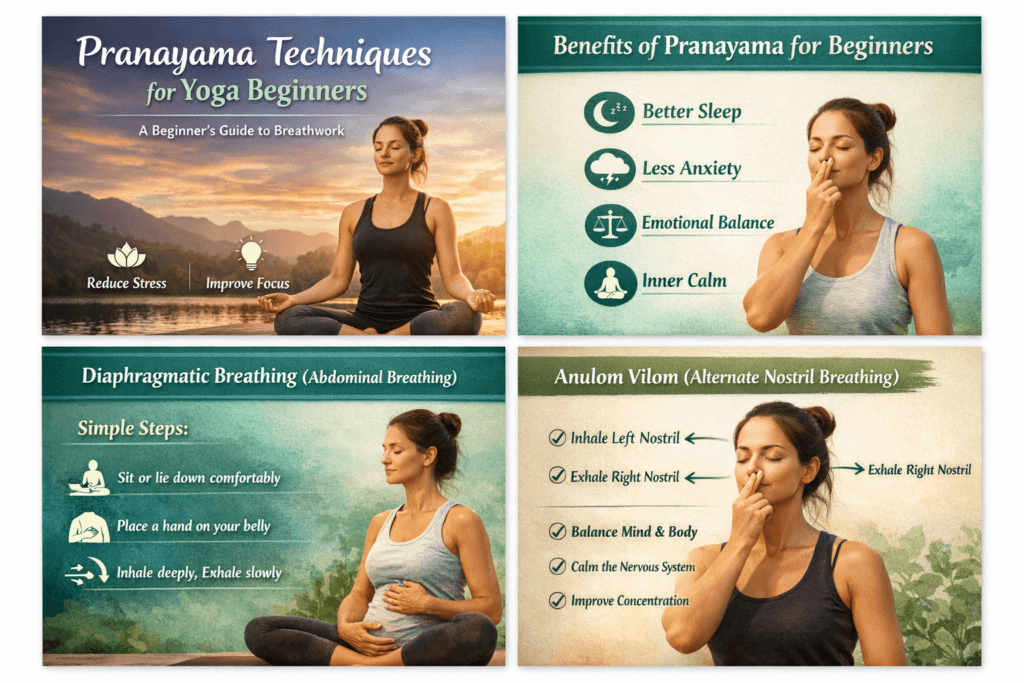
Even short, daily breathwork sessions can create noticeable changes.
Benefits Beginners Often Notice Quickly
- Deeper, more restorative sleep
- Reduced stress and anxiety
- Improved emotional balance
- Better focus and mental clarity
- A gentle sense of inner calm
Because breathing directly affects the nervous system, Pranayama is especially helpful for beginners looking to manage stress naturally.
Important Things to Know Before Starting Pranayama
Starting Pranayama is about progress, not perfection. Everyone’s breath is different, and improvement happens gradually.
Common Myths About Pranayama
- You need years of yoga experience ❌
- Breathwork is complicated ❌
- It must be practiced in silence or special settings ❌
In reality, Pranayama techniques for beginners are simple, adaptable, and easy to integrate into everyday life.
Essential Pranayama Techniques for New Practitioners
These beginner Pranayama breathing exercises are safe, effective, and ideal for building confidence.
1. Diaphragmatic Breathing (Abdominal Breathing)
Diaphragmatic breathing is the foundation of all Pranayama practices. It trains you to breathe deeply using the diaphragm rather than shallow chest breathing.
How to practice:
- Sit or lie down comfortably
- Place one hand on your belly
- Inhale slowly through the nose, letting the belly rise
- Exhale gently, allowing the belly to fall
Beginner tip: Slow the breath if your chest rises more than your belly.
2. Anulom Vilom (Alternate Nostril Breathing)
Anulom Vilom is one of the most popular Pranayama techniques for beginners. It balances the nervous system and promotes mental clarity.
Benefits:
- Calms the mind
- Reduces anxiety
- Improves concentration
Beginner tip: Avoid breath retention at first — focus on smooth, relaxed breathing.
3. Ujjayi Breath (Victorious Breath)
Ujjayi breathing involves a gentle constriction at the back of the throat, creating a soft ocean-like sound.
Benefits:
- Improves focus
- Builds internal warmth
- Anchors awareness during yoga practice
Beginner tip: Practice seated before using Ujjayi during yoga flows.
Pranayama Safety Tips for Beginners
Breathwork should always feel supportive and calming — never forced.
Follow these safety guidelines:
- Start slowly and gently
- Avoid straining or holding the breath
- Stop immediately if you feel dizzy or uncomfortable
- Skip advanced techniques until you feel confident
If unsure, learn from a qualified instructor or guided tutorial.
Creating a Comfortable Pranayama Practice Space
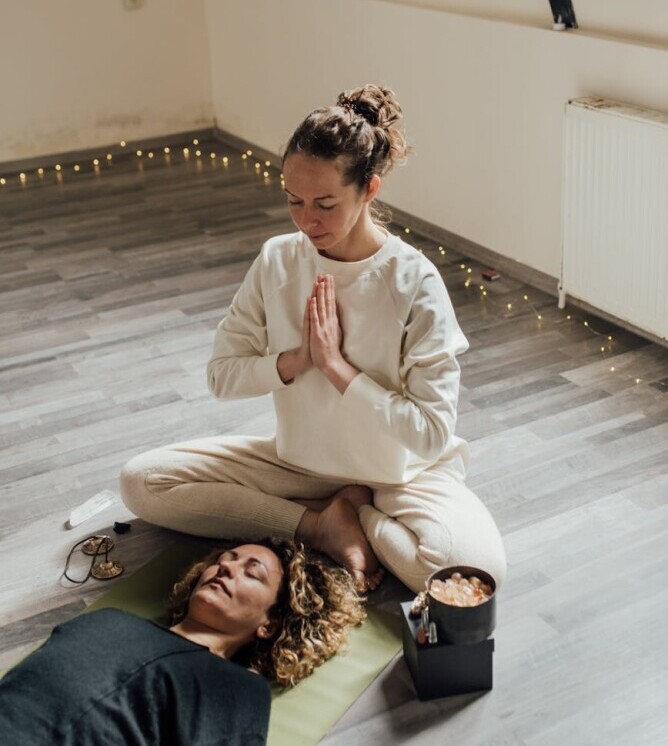
Your Pranayama space doesn’t need to be perfect — it just needs to feel calm and intentional.
Choose a Quiet Spot
A bedroom corner, yoga mat area, or balcony works well.
Use Supportive Props
- Yoga mat or cushion
- Folded blanket
- Back support if needed
Set a Relaxing Mood
- Soft lighting or candles
- Essential oils like lavender or eucalyptus
- A tidy, uncluttered space
Tip: Consistency matters more than atmosphere — don’t wait for the “perfect” setup.
Building a Sustainable Pranayama Routine
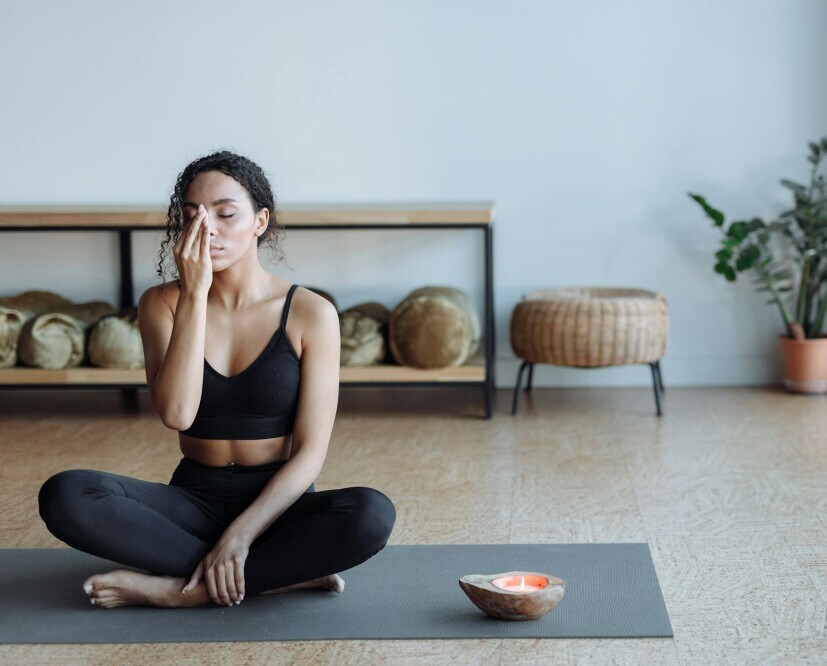
Best Time to Practice
- Morning: Enhances clarity and energy
- Evening: Helps release stress and tension
Even 5–10 minutes daily can produce lasting benefits.
Integrating Pranayama Into Daily Life
One of the greatest benefits of Pranayama is its flexibility.
Practice Breathwork Anywhere
Try mindful breathing while:
- Commuting
- Waiting in queues
- Preparing meals
- Transitioning between tasks
- Winding down before bed
These small moments add up to powerful changes over time.
Guided vs Self-Led Pranayama Practice
Both approaches support beginners.
Guided practice:
- Ideal for learning technique
- Builds confidence and structure
Self-led practice:
- Encourages intuition
- Deepens body awareness
Switch between both as your comfort grows.
Tracking Progress and Staying Motivated
Keeping a simple breathing journal helps you:
- Identify calming techniques
- Track session length
- Notice changes in stress, sleep, and energy
Community support — yoga classes, workshops, or online breathwork groups — can also keep you inspired and consistent.
Related FAQs
Is Pranayama safe for beginners?
Yes, gentle Pranayama techniques are safe for beginners when practiced slowly and without force.
How long should beginners practice Pranayama?
Beginners can start with 5–10 minutes daily and gradually increase as comfort improves.
Can I practice Pranayama without doing yoga?
Absolutely. Pranayama can be practiced on its own and still provide significant benefits.
What is the best Pranayama technique for anxiety?
Diaphragmatic breathing and Anulom Vilom are especially effective for calming anxiety.
Should Pranayama be practiced on an empty stomach?
Yes, it’s best practiced on an empty stomach or at least 2–3 hours after eating.
Final Thoughts: Why Pranayama Is Perfect for Beginners
Pranayama is one of the most accessible wellness practices available. It requires no equipment, flexibility, or prior experience — only a willingness to pause and breathe consciously.
With regular practice, breathwork becomes less of an exercise and more of a natural part of daily life. When you learn to work with your breath, calm, balance, and clarity naturally follow.




alzheimer disease therapy amazon bean products bean products bean bags bean products bed pillows bean products bolster bean products chicago bean products coupon code bean products decorative accent pillows bean products shredded foam bean products usa bean products yoga Dream Diaries energy healing guided meditation for cancer guided meditation for cancer healing guided meditation for cancer patients how to lucid dream Law of Attraction Light and Sound Machine lucid dream herbs Manifestation Marcus Aurelius Marcus Aurelius Meditations Marcus Aurelius Most Famous Quotes meditation meditation alzheimer meditation alzheimer prevention meditation alzheimers meditation dementia meditation for cancer healing meditation for memory loss meditation memory meditation memory loss mr bean new products pre dementia reiki alzheimer reiki dementia reiki distance healing remote viewing exercises free remote viewing future remote viewing future predictions remote viewing gambling The Source third eye meditation transcendental meditation for cancer